
Maintaining your fire doors isn’t just a legal checkbox—it’s a critical safety measure that can protect your escape route and provide occupants with those vital extra minutes needed to evacuate safely. Well-maintained fire doors can last between 10 to 20 years, making regular quarterly or bi-annual checks a smart investment in both safety and property longevity.
Here is a comprehensive guide on how to use your fireriskassessments.com door gap measurer and what to look for during your routine inspections.
1 Gaps
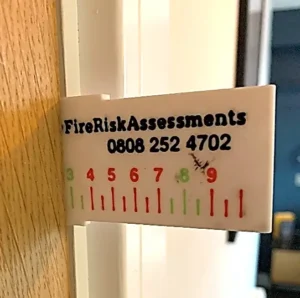
What to check
Fire doors should fit comfortably into the door frame and gaps to the top and sides should ideally be between 2-3mm and NOT exceed 4mm. For double doors, when they are closed there should not be any light showing through the middle, where the two door leaves meet.
Threshold gaps should ideally be within 8mm and NOT exceed 10mm BUT if the door is fitted with smoke seals, as it is crucial to the occupant’s life safety that the spread of smoke is prevented, then the threshold gap should also be 3mm.
Our door gap measurer is a helpful tool for checking if your gaps are within the guidelines.
Why
Fire doors must fit snugly to be effective. Excessive gaps allow smoke and fire to bypass the door and prevents the seals & strips working
2. Strips & seals
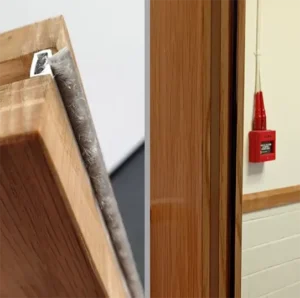
What to check
Cold smoke seals will be fitted into the frame of the door OR around the door itself, they protrude and you will often hear them as the door opens or closes, as they rub against the frame. There are various types including rubber/silicone flexible fins (usually two) or brush type. These can damage over time as they get worn, gaps appear, some can fall off or get pulled off. It must be ensured that they provide a seal around the whole door, so even small gaps don’t appear.
Intumescent strips are fitted into rebates in the door or frame and expand when exposed to heat and will prevent the spread of fire. These aren’t obviously fitted to the door or frame, as they are inserted into the frame which means they can get painted over.
Small layers of paint on just intumescent strips may be acceptable, however if the strips are combined with cold smoke seals or the paint is excessive then this will prevent the strips and seals working effectively and they will need to be replaced.
Why
There is always a gap around the fire door to enable it to close into the rebate and the cold smoke seal fills that gap to prevent smoke escaping. Smoke reduces visibility and can kill. Preventing it spreading into areas that are needed to escape is essential to maintaining a clear and safe evacuation route, for occupants. Similarly, the intumescent strip will expand into the gap preventing the spread of fire, which gives occupants a longer time to evacuate.
In both cases if the gap is too big they will NOT be able to function effectively as the gap won’t be sealed and both smoke and fire will be able to spread.
3 Hinges
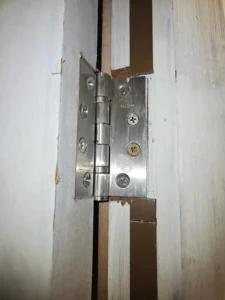
What to check for
Fire doors should have 3 fire rated hinges and no screws missing or damage. If the hinges haven’t been painted over you can look for the CE or UKCA mark as well as the BS EN 1634. Hinges can be steel or brass. If in any doubt, research any marking for their suitability. The hinges should be fire resistant to the same standard as the door – eg 30 or 60 minutes.
Why
Fire doors are heavy and three hinges ensures that in the event of a fire, the door doesn’t warp and remains in the frame, preventing the spread of smoke and fire.
4 Door closers
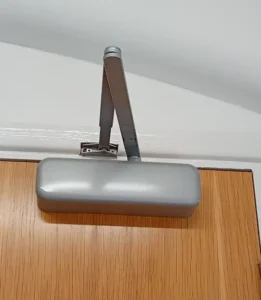
What to check for
Ensure the door closer has sufficient force to close the door fully into the door frame and latches closed, from 90 degrees. This should take approx. 3-7 seconds, if it is required to close more slowly it shouldn’t exceed 25 seconds. It shouldn’t slam shut but it must close fully. There are many different types of self-closers, which keep fire doors closed, as well as automatic closers, which hold the doors open and release the door on activation of a fire alarm. In all cases they must be fire resistant and must be maintained and check that they function correctly, haven’t been damaged or in some cases adjusted/removed.
Why
Fire doors must be closed in order to do their job, occupants fleeing a fire are unlikely to stop to close a door after themselves, so the closers make sure the fire doors are kept shut. This is particularly important at night for areas of higher risk eg kitchens, should a fire occur during the night it takes longer for occupants to react to an alarm and providing additional time to evacuate safely, is crucial.
5 Glazing & grilles
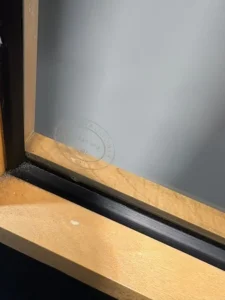
What to check for
Have any vision panels or grilles been added after installation and do they meet manufacturers guidelines. Glazing should be fire rated and have the right seals around the glass. Make sure any vision panels are not obscured. Air transfer grilles must have intumescent linings.
Why
Any alterations to fire doors must be carried out by a competent person to ensure the door’s integrity is not compromised and it still provides its original level of fire protection. Vision panels must not be obscured, as they allow occupants to check for smoke or fire before entering another area or to detect smoke early when escaping from an inner room. The glass needs to fire rated and fitted with the correct seals. Air transfer grilles must be fitted with intumescent lining so openings seal automatically in the event of a fire.
6 Door, Door frame & Opening mechanisms
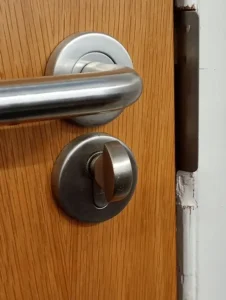
What to check for
Check for any visible damage to the door, door frame & door furniture. You should be able to open a fire door in one easy motion without the use of a key. If your fire door locks, then the opening mechanism could be a thumb turn. If it has a number pad, you should have a manual override button.
Why
Any damage whether to the door, frame or door furniture should be identified as it could impact on the protection it provides or it could delay/prevent evacuation if the door does not open easily. If a handle/lock is damaged it could enable the spread of smoke/fire if the mechanism is loose, badly fitted.
7 Signage
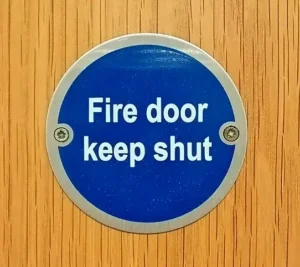
What to check for
Does the door have the correct fire safety signage and is it clear and undamaged. Fire door signs are blue circles which highlight it is a fire door with ‘Keep Shut’ , ‘Keep Locked Shut’ or ‘Automatic’. The sign should be clear, undamaged and with the correct instructions.
Why
Signage is legally required to clearly indicate that doors should be kept shut to prevent the spread of smoke and fire.
How do you know if it is a fire door?
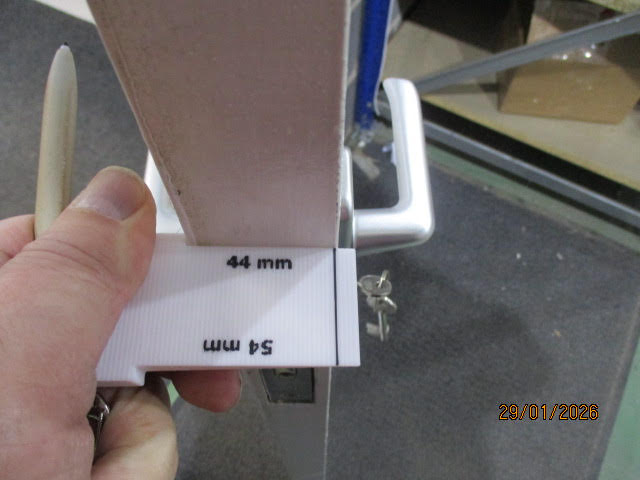
There are a number of indicators that will help to identify a modern fire door. Fire doors are a minimum of 44mm deep (FD30) up to 54mm (FD60) and be of solid construction. Majority of internal fire doors are wood however they can be metal, fire resistant glass or other fire-resistant materials.
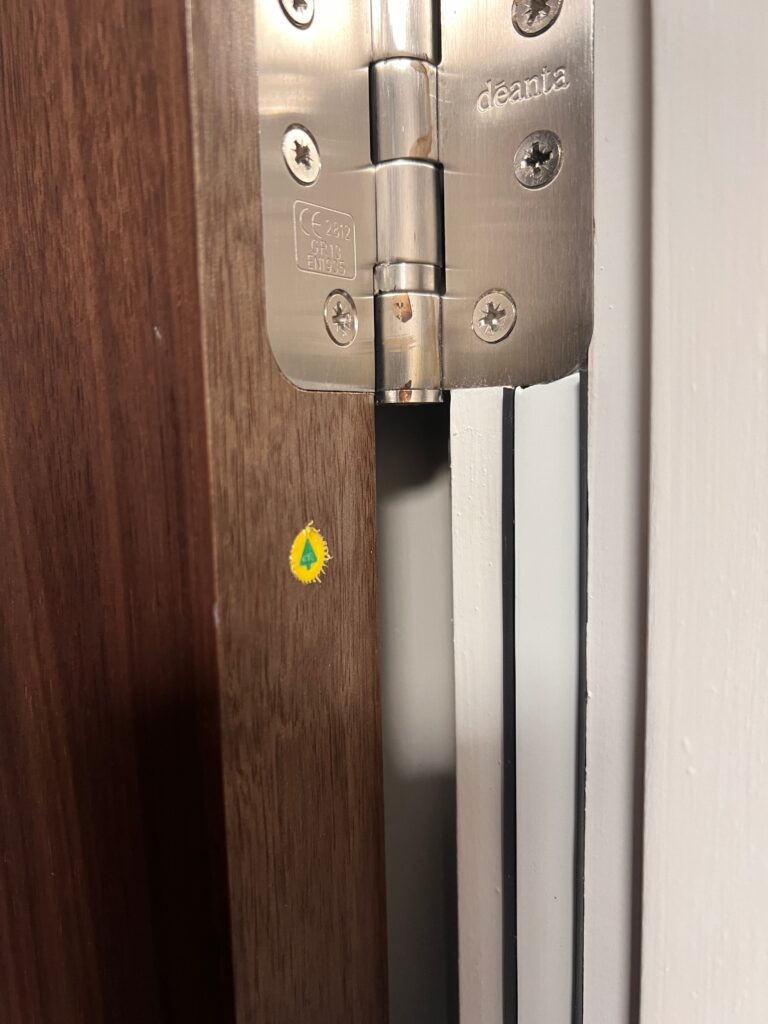
Most modern fire doors will have a label (usually along the top) or a coloured plug inserted into the door.
Older fire doors may not have labels or paperwork, therefore a fire risk assessment can identify where fire doors are required and whether the existing doors are suitable.
Generally older doors are classed as either:
NOTIONAL (Pre 1985) = when the current door, satisfied the standard applicable for fire resisting doors, at the time the building was constructed. This type of door may not have been fitted with intumescent strips and/or smoke seals to perform as a fire door, to comply with building regulation requirements. These doors are often of good construction and can be upgraded with the fitting of strips and seals and door closers BUT only if the risk to life is low and all occupants can be expected to evacuate in a reasonable time, as the doors will delay the spread of smoke and fire but for an unspecified time.
NOMINAL (Post 1985) = The term is based on an existing fire door that can provide fire resistance performance for a specified period of time. The door has all the elements you would expect for a modern standard fire door, however there are no labels or plugs to verify the certification of the door or the manufacturer.